Into the Wild: The Ultimate Guide to Yala National Park and Sri Lankan Safaris
Sri Lanka might be a small island, but it boasts a level of biodiversity that rivals some of the largest continents on Earth. Among its numerous protected reserves, one name stands out globally: Yala National Park. Renowned for having one of the highest leopard densities in the world, Yala offers an unparalleled wildlife experience where the dense jungle meets the crashing waves of the Indian Ocean.
Whether you are a professional wildlife photographer, a nature enthusiast, or a family looking for an unforgettable adventure, this comprehensive guide will walk you through everything you need to know about planning the perfect safari in Yala National Park. From understanding the park's intricate zones to choosing the right safari provider and knowing exactly what to pack, we have you covered.
1. Understanding Yala National Park: Geography and History
Located in the southeastern region of Sri Lanka, spanning the Southern and Uva Provinces, Yala National Park covers a massive area of 979 square kilometers. Originally used as a hunting ground for the British elite during the colonial era, Yala was designated as a wildlife sanctuary in 1900 and eventually upgraded to a national park in 1938.
The park is divided into five distinct blocks (zones). However, to protect the fragile ecosystem and minimize human interference, only two blocks—Block 1 and Block 5—are consistently open to the general public.
Block 1 (Ruhuna National Park): This is the most famous and most visited section of Yala. It borders the ocean and features a incredibly diverse landscape of monsoon forests, thorn forests, fresh and marine wetlands, and sandy beaches. It is here that you have the highest statistical probability of spotting the elusive Sri Lankan Leopard.
Block 5: Opened more recently to tourists, this block offers a quieter, more rugged experience. While leopard sightings are slightly less frequent here compared to Block 1, the landscape is stunning, featuring beautiful lakes and a higher chance of enjoying sightings without the congestion of other safari jeeps.
2. The Big Three: What Wildlife Can You Expect to See?
While Yala is home to 44 varieties of mammals and 215 bird species, most visitors come with the hope of spotting Sri Lanka's "Big Three."
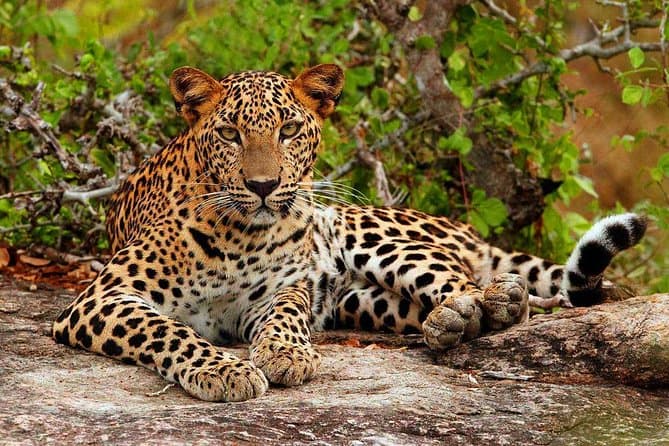
The Sri Lankan Leopard (Panthera pardus kotiya):
Yala is internationally famous for these apex predators. The Sri Lankan leopard is a distinct subspecies, uniquely adapted to the island. Because they lack natural predators (unlike their African cousins who must compete with lions and hyenas), Sri Lankan leopards are known to be more confident and are frequently seen prowling in broad daylight or lounging on the massive granite boulders that dot the park.
The Asian Elephant (Elephas maximus maximus):
While places like Minneriya or Udawalawe might have larger concentrated herds, Yala is home to a robust population of around 300-350 elephants. Watching a family of elephants bathing in one of the park's ancient wewas (reservoirs) or witnessing a massive lone tusker emerging from the dense scrub jungle is a truly magical experience.
The Sloth Bear (Melursus ursinus):
Perhaps the most elusive of the Big Three, the Sri Lankan sloth bear is a nocturnal, shaggy-coated creature that is a rare treat to spot. Your best chance of seeing them is during the Palu tree fruiting season (usually May to July), when they abandon their usual caution to feast on the sweet, sticky fruits in broad daylight.
Other Notable Wildlife:
Beyond the Big Three, Yala is a living, breathing documentary. You are almost guaranteed to see troops of Tufted Gray Langurs and Toque Macaques, massive Water Buffaloes, Spotted Deer (Chital), Sambar Deer, Wild Boars, and Golden Jackals. For reptile lovers, the park's waterways are teeming with Mugger Crocodiles, Estuarine Crocodiles, and Water Monitors.
A Birder’s Paradise:
For ornithologists, Yala is a dream destination. It is home to endemic species like the Sri Lanka Wood Pigeon and the Sri Lanka Junglefowl (the national bird). During the migratory season (November to April), thousands of waterfowl flock to the park's lagoons. You will easily spot vibrant Peacocks displaying their plumage, Painted Storks, the majestic Malabar Pied Hornbill, and various species of eagles and kingfishers.
3. Decoding the Seasons: The Best Time to Visit Yala
Timing is everything when it comes to wildlife safaris. Sri Lanka's tropical climate means the weather can dramatically impact animal behavior.
The Dry Season (February to July):
This is widely considered the absolute best time for a safari in Yala. As the dry season progresses, water becomes scarce in the dense jungle. This forces wildlife—especially leopards, elephants, and bears—to emerge from the thickets and congregate around the remaining waterholes. The lack of dense foliage also dramatically improves visibility.
The Wet Season (October to January):
During the northeast monsoon, Yala transforms into a lush, emerald-green paradise. While the scenery is spectacularly beautiful and birdwatching is at its peak, mammal spotting becomes more challenging. Animals have plenty of water scattered throughout the jungle and do not need to visit the main lakes. The thick vegetation also gives them plenty of cover.
Crucial Note: The Annual Park Closure
It is vital to know that Yala National Park (specifically Block 1) typically closes for a month every year, usually from September 1st to October 31st (the exact dates can vary slightly based on the Department of Wildlife Conservation's directives). This closure is designed to give the animals a respite from human activity during the peak of the drought and to allow the park authorities to conduct maintenance. If you are traveling during this time, you will need to plan your safari in a different park, such as Udawalawe or Minneriya.
4. Choosing Your Safari Experience: Morning, Evening, or Full Day?
When booking a jeep, you will typically be offered three options. Each provides a very different experience.
The Morning Safari (6:00 AM to 10:00 AM):
This is the most popular choice. The park gates open at 6:00 AM. Arriving early means you enter as the jungle is waking up. The temperature is cool, predators are finishing their nocturnal hunts, and the morning light is incredibly soft and golden—perfect for photography. Leopards are often seen walking along the sandy tracks before the heat of the day forces them into the shade.
The Afternoon Safari (2:30 PM to 6:00 PM):
As the midday heat breaks, animals begin to stir again. Elephants often make their way to the waterholes for an afternoon bathe, and leopards may emerge from the bushes to stretch and prepare for the evening hunt. The park closes strictly at 6:00 PM, and the golden hour leading up to sunset offers spectacular silhouettes against the lakes.
The Full-Day Safari (6:00 AM to 6:00 PM):
For hardcore wildlife enthusiasts and serious photographers, the full-day safari is the ultimate choice. You stay in the park through the midday heat, usually having a packed picnic lunch by the Patanangala beach or the Manik River. While animal activity drops significantly between 11:00 AM and 2:00 PM, staying in the park means you are already deep inside the territory when the afternoon activity begins, completely bypassing the queue of jeeps entering at 2:30 PM.
5. Step-by-Step Guide to Booking Your Yala Safari
Booking a safari in Sri Lanka is straightforward but requires some know-how to ensure you get a quality experience without overpaying.
1. Finding a Jeep and Driver:
You cannot drive your own vehicle into the park; you must hire a specially modified 4x4 safari jeep. You can book these through your hotel in Tissamaharama (the gateway town to Yala), through online platforms, or directly with drivers in town. A standard jeep seats up to 6 people. Ensure the vehicle has raised, stadium-style seating and an open top or large viewing windows.
2. Park Entrance Fees:
The cost of the jeep is separate from the park entrance fee. The Department of Wildlife Conservation charges entry fees based on a complicated formula that includes a base ticket price per foreigner (approx. $15-$25 USD), vehicle fees, and taxes. It is highly recommended to ask your jeep provider for a "Total Package" price that includes the jeep hire, the driver, and all park entrance tickets to avoid confusion at the gate.
3. The Role of the Tracker:
By law, every jeep entering the park must be accompanied by a government-appointed wildlife tracker. These trackers board your jeep at the ticket office. While their English proficiency varies, their eyesight is superhuman. They can spot a leopard's tail twitching in a bush a hundred yards away. A good tip (around 1000 - 2000 LKR) at the end of the trip is highly appreciated if they work hard to find the animals.
6. Where to Stay: From Budget Stays to Luxury Glamping
Your choice of accommodation can drastically alter your safari experience.
Tissamaharama (Tissa): The Budget and Mid-Range Hub
Located about 45 minutes from the park gates, Tissa is a bustling town surrounded by ancient stupas and beautiful lakes. It offers hundreds of guesthouses, homestays, and mid-range hotels. Staying here is economical, and every hotel can arrange a jeep to pick you up at 5:00 AM for a morning safari.
Luxury Eco-Resorts and Glamping:
For an unforgettable, immersive experience, book a luxury tented camp situated on the borders (or in the buffer zone) of Yala. Places like Wild Coast Tented Lodge, Chena Huts, or Cinnamon Wild Yala offer absolute luxury in the middle of the wilderness. It is not uncommon for elephants or wild boars to walk right past your private pool. These lodges usually provide all-inclusive packages with highly trained, English-speaking naturalists driving high-end, comfortable jeeps.
7. Essential Safari Etiquette and Rules
Yala is a protected reserve, not a zoo. Respecting the environment and the animals is paramount.
Silence is Golden: Loud talking, shouting, or playing music will scare the animals away. Keep your voices to a whisper.
Do Not Stand Up on the Roof: Keep your arms and legs inside the vehicle. Sudden movements can startle wildlife.
Never Feed the Animals: Feeding wildlife alters their natural behavior and can make them aggressive toward future vehicles.
No Flash Photography: The sudden burst of light can distress and disorient animals, especially in the early morning.
Take Nothing but Pictures, Leave Nothing but Footprints: Do not litter. Ensure all water bottles, snack wrappers, and tissues stay inside the jeep and are disposed of back at your hotel.
8. What to Pack for a Yala Safari
Being prepared will make your 4-hour bumpy ride much more comfortable.
Earth-Toned Clothing: Wear breathable cotton or linen in khaki, brown, beige, or olive green. Avoid bright colors (especially bright reds or neon) which can alarm animals, and avoid black or dark blue, which absorb heat and attract tsetse flies.
Dust Protection: The tracks in Yala are incredibly dusty. Bring a scarf, bandana, or face mask to cover your mouth and nose.
Sun Protection: A wide-brimmed hat, polarized sunglasses, and high SPF sunscreen are mandatory, even in the morning.
Optics and Cameras: A good pair of binoculars (8x42 or 10x42) is invaluable. For photography, a telephoto lens of at least 300mm (preferably 400mm-600mm) is necessary to capture close-up shots of leopards and birds.
Hydration: Bring plenty of water. Most reputable jeep drivers will provide a cooler with bottled water, but it's best to carry your own reusable bottle.
9. Alternatives to Yala: When the Park is Closed or Too Crowded
If Yala feels too crowded, or if you are visiting during the September/October closure, Sri Lanka has phenomenal alternatives:
Udawalawe National Park: The best place in Sri Lanka (and arguably Asia) to guarantee elephant sightings. It is less crowded and has a beautiful, open savannah landscape.
Wilpattu National Park: Located in the northwest, this is Sri Lanka’s largest park. It features natural lakes (Villus) and is famous for leopards and sloth bears. The thick jungle means spotting animals is harder, but the experience is much wilder and completely free of jeep traffic jams.
Minneriya and Kaudulla National Parks: Famous for "The Gathering" (July to September), where hundreds of elephants congregate around the ancient reservoirs.
Conclusion: Embracing the Wild
A safari in Yala National Park is a journey into the raw, untamed heart of Sri Lanka. It is a place of dramatic landscapes, brutal survival, and breathtaking beauty. While spotting a leopard is the ultimate prize, the true magic of Yala lies in simply being present in the jungle. Watching a peacock take flight at dawn, hearing the alarm call of a deer echoing through the trees, and smelling the dry earth after a sudden monsoon shower—these are the moments that will linger in your memory long after you have left the island. Prepare well, respect the wilderness, and let Yala reveal its secrets to you.