GuideThe Complete Travel Guide to Sri Lanka's Cultural Triangle
Sri Lanka is not just an island of stunning beaches and wildlife; it is a land steeped in over two millennia of recorded history. At the heart of this historical wealth lies the "Cultural Triangle," a region situated in the central plains of the island. Bounded by the ancient cities of Anuradhapura to the north, Polonnaruwa to the east, and Kandy to the south (with the magnificent Dambulla and Sigiriya sitting right in the middle), this area is an absolute must-visit for history buffs, spiritual seekers, and architectural enthusiasts.
In this comprehensive travel guide, we will break down everything you need to know about navigating the Cultural Triangle, exploring ancient kingdoms, and immersing yourself in the rich Buddhist heritage of Sri Lanka.
1. What is the Cultural Triangle?
The concept of the Cultural Triangle was popularized in the 1980s by the Sri Lankan government and UNESCO to preserve and promote the country's ancient heritage. This geographic triangle contains some of the oldest and most spectacular archaeological ruins in Asia. It tells the story of early Sinhalese civilization, the arrival of Buddhism in the 3rd century BC, and the architectural mastery of ancient kings who built towering stupas that rivaled the pyramids of Egypt in scale.
While you could easily spend weeks exploring every ruin and temple, most travelers dedicate 3 to 5 days to cover the major highlights.
2. Anuradhapura: The First Great Capital
As the first ancient capital of Sri Lanka, Anuradhapura served as the political and religious center of the island for over 1,300 years (from the 4th century BC to the 11th century AD). Today, it is a sprawling UNESCO World Heritage site and an active place of pilgrimage.
The Jaya Sri Maha Bodhi:
This is the spiritual heart of Anuradhapura. The Jaya Sri Maha Bodhi is a sacred fig tree, grown from a cutting of the original Bodhi tree in Bodh Gaya (India) under which the Buddha attained enlightenment. Planted in 288 BC, it is the oldest living human-planted tree in the world with a documented history. You will see hundreds of pilgrims dressed in white, offering lotus flowers and chanting softly in the shade of this ancient tree.
Ruwanwelisaya (The Great Stupa):
Just a short walk from the Bodhi tree is the Ruwanwelisaya. Built by King Dutugemunu in 140 BC, this massive, gleaming white hemispherical stupa is one of the tallest monuments of the ancient world. The stupa is surrounded by a massive wall decorated with hundreds of carved elephants. Visiting this site at sunset, when the white dome glows against the twilight sky and oil lamps are lit by pilgrims, is a deeply moving experience.
Jetavanaramaya:
When it was built in the 3rd century AD, the Jetavanaramaya was the third tallest structure in the ancient world, surpassed only by the two great pyramids of Giza. Built entirely of baked bricks, its sheer scale is mind-boggling. Unlike Ruwanwelisaya, it remains largely unpainted, allowing you to see the incredible brickwork of ancient engineers.
How to Explore: The ruins of Anuradhapura are spread across a massive area. The best way to explore is by hiring a tuk-tuk for the day or renting a bicycle. The terrain is flat, making cycling a pleasant option if you start early in the morning to beat the heat.
3. Polonnaruwa: The Medieval Kingdom
After Anuradhapura was destroyed by South Indian Chola invaders in 993 AD, the capital was moved to Polonnaruwa. The ruins here are much younger (mostly from the 11th and 12th centuries) and, as a result, are far better preserved. Polonnaruwa represents a golden age of agricultural prosperity and artistic achievement.
The Royal Palace Complex:
Start your journey at the Royal Palace of King Parakramabahu I. Originally a massive seven-story structure, today you can walk through the remaining three stories and admire the thick brick walls and the adjacent Royal Baths (Kumara Pokuna), which were fed by underground water channels.
The Quadrangle (Dalada Maluva):
This raised platform contains the highest concentration of stunning architecture in Polonnaruwa. The centerpiece is the Vatadage, a circular relic house with beautifully preserved stone carvings, guardstones, and moonstones. Just next to it is the Nissanka Latha Mandapaya, featuring unique stone pillars carved to look like swaying lotus stems.
Gal Vihara (The Rock Temple):
This is the absolute highlight of Polonnaruwa and a masterpiece of Sri Lankan rock carving. The Gal Vihara consists of four colossal Buddha statues carved directly into a single, massive granite rock face. The statues—one seated, one standing, and a massive 14-meter reclining Buddha—express a profound sense of peace and artistic perfection.
How to Explore: Polonnaruwa is more compact than Anuradhapura. The archaeological park is beautifully maintained and perfect for exploring by bicycle. You can rent a bike at the main gate for a few dollars.
4. Dambulla: The Golden Cave Temple
Located at the geographic center of the Cultural Triangle, Dambulla is famous for the largest and best-preserved cave temple complex in Sri Lanka, dating back to the 1st century BC.
King Valagamba took refuge in these caves for 14 years after being driven out of Anuradhapura by invaders. Upon reclaiming his throne, he converted the caves into a magnificent temple.
To reach the caves, you must climb a moderately steep rock face (about a 20-minute walk). Once at the top, you will find five separate caves tucked under a massive rocky overhang. Inside, the walls and ceilings are entirely covered in intricate, vibrant Buddhist murals that follow the natural contours of the rock. The caves house over 150 stunning statues of the Buddha, Sri Lankan kings, and Hindu deities. The dimly lit, cool interiors of the caves provide a mystical and serene atmosphere.
5. Integrating Sigiriya and Minneriya
While you already know about the wonders of Sigiriya Lion Rock, it is important to note that Sigiriya and Dambulla are only 30 minutes apart. Many travelers use either Dambulla or the town of Sigiriya as their base camp to explore the central triangle.
The Elephant Gathering at Minneriya/Kaudulla:
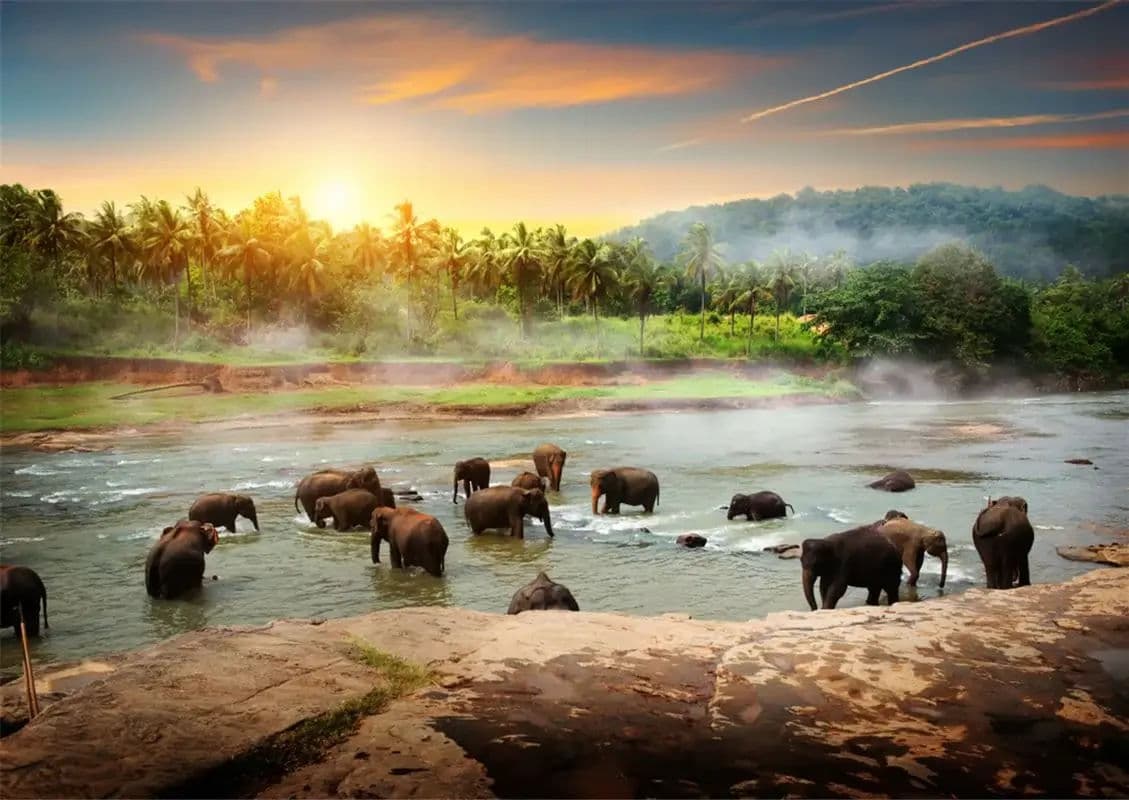
A trip to the Cultural Triangle is not complete without experiencing a wildlife safari. Located just a short drive from Sigiriya and Polonnaruwa are the Minneriya and Kaudulla National Parks. From July to October, as water levels drop, hundreds of wild Asian elephants migrate to the grassy banks of the ancient Minneriya reservoir. This event, known simply as "The Gathering," is the largest meeting of Asian elephants anywhere in the world and is a spectacular sight to behold.
6. Practical Tips for the Cultural Triangle
1. The Cultural Triangle Ticket:
Be prepared for entrance fees. As these are major UNESCO sites, ticket prices for foreign visitors are relatively high (Anuradhapura and Polonnaruwa are roughly $25-30 USD each). Carry sufficient cash, as card machines are not always reliable at ticket counters.
2. The Dress Code (Crucial):
All of these archaeological sites are active places of Buddhist worship. The dress code is strictly enforced. Both men and women MUST cover their shoulders and knees. Wearing a sarong or long lightweight trousers and a t-shirt is ideal. You will also be required to remove your shoes and hats before entering the immediate vicinity of a stupa or walking on a temple platform.
3. Surviving the Heat and the Sand:
The Cultural Triangle is located in the dry zone. It gets incredibly hot, especially between 11 AM and 3 PM. Start your tours as early as 7 AM.
Pro Tip: Because you have to take your shoes off to walk on the temple grounds, the sun-baked sand and stone can literally burn the soles of your feet. Always pack a pair of thick socks in your daypack to wear when you have to remove your shoes.
4. Getting Around:
If you are on a budget, local buses connect Anuradhapura, Dambulla, Polonnaruwa, and Kandy frequently and are extremely cheap. However, if you have limited time, hiring a private driver for 3-4 days is highly recommended. It offers air-conditioned comfort and the flexibility to stop at roadside fruit stalls or hidden temples along the way.
Conclusion
Exploring the Cultural Triangle is like walking through a living museum. It is a journey that reveals the ingenuity of ancient engineers, the devotion of early Buddhists, and the turbulent history of island kings. From the towering brick stupas of Anuradhapura to the peaceful rock-cut Buddhas of Polonnaruwa, these ancient cities offer a profound and unforgettable glimpse into the soul of Sri Lanka. Take your time, brave the midday heat, and let the echoes of the past guide your adventure.
Read Guide