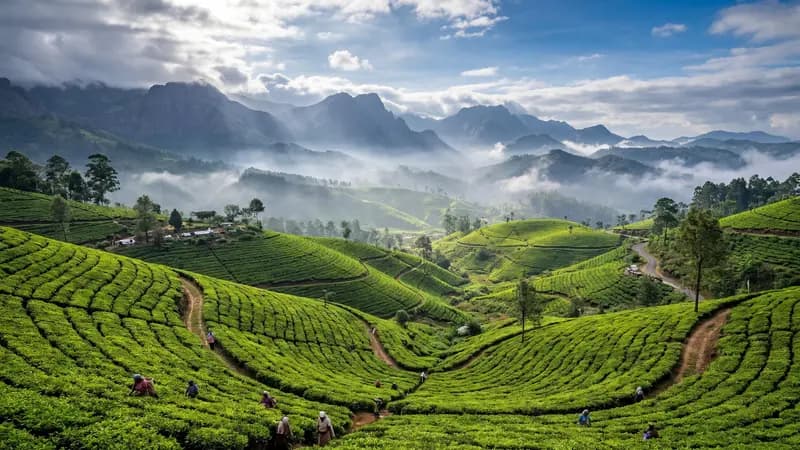
Journey into the Clouds: The Ultimate Guide to Nuwara Eliya and Sri Lanka's Tea Country
After spending a few days sweltering in the tropical heat of Sri Lanka’s coastal beaches or cultural plains, a trip to the central highlands feels like stepping onto a completely different continent. As your vehicle winds its way up the misty, serpentine mountain roads, the palm trees are replaced by endless, emerald-green carpets of tea bushes. Welcome to Nuwara Eliya, the heart of Sri Lanka’s tea country, affectionately known as "Little England."
Sitting at an elevation of 1,868 meters (6,128 feet), Nuwara Eliya boasts a cool, crisp climate. With its red-brick post office, perfectly manicured golf courses, and grand colonial hotels, the town retains a charming, vintage British atmosphere. This ultimate guide will help you navigate the misty hills, understand the legacy of Ceylon tea, and discover the best nature trails in the region.
1. The Legacy of "Little England" and Ceylon Tea
To truly appreciate Nuwara Eliya, one must look back to the 19th century. During the British colonial era, European planters and civil servants sought a retreat from the punishing lowland heat. They discovered this cool mountain valley and quickly transformed it into a slice of home, building Tudor-style bungalows, a racecourse, and a gentlemen's club.
However, the region’s true economic powerhouse was born out of a crisis. Originally, the British planted coffee in these hills. When a devastating leaf disease wiped out the coffee plantations in the 1860s, a Scottish planter named James Taylor introduced tea as a replacement. The cool temperatures, high altitude, and unique soil conditions proved perfect for it. Today, "Ceylon Tea" is globally renowned for its distinct flavor, aroma, and golden color, and Nuwara Eliya produces some of the finest high-grown teas in the world.
2. The Tea Factory Experience: From Leaf to Cup
You cannot visit Nuwara Eliya without experiencing a working tea plantation. The hills surrounding the town are dotted with historic tea factories, many of which offer guided tours.
What to Expect on a Tour:
When you visit a factory like Pedro Tea Estate or Blue Field Tea Gardens, a guide will walk you through the fascinating, centuries-old process of tea making. You will learn about the precise art of plucking (where only the top "two leaves and a bud" are picked by the skilled hands of tea pluckers).
You will then follow the leaves through the withering troughs, the rolling machines that crush the leaves to start oxidation, the fermentation process, and finally, the firing and sorting rooms. The aroma inside these factories is intoxicating—a mix of fresh pine, sweet floral notes, and rich, malty black tea. The tour always concludes with a complimentary tea tasting, where you can sip the freshest cup of tea you will ever have, overlooking the very valley it was grown in.
3. Top Attractions Within Nuwara Eliya Town
Nuwara Eliya is small enough to explore comfortably, yet packed with colonial charm and natural beauty.
Gregory Lake:
Situated just south of the town center, this picturesque, man-made lake was constructed in 1873 by Governor William Gregory. Today, it is a hub of recreational activity. You can hire swan-shaped paddle boats, take a high-speed jet ski ride, or simply rent a bicycle and cycle along the scenic, flower-lined paved paths surrounding the water.
Victoria Park:
Named in honor of Queen Victoria's Diamond Jubilee, this beautifully maintained park is a peaceful oasis in the middle of town. It is a fantastic spot for birdwatchers, as it is home to several rare Himalayan migratory birds, including the Kashmir Flycatcher and the Indian Blue Robin.
The Nuwara Eliya Post Office:
Built in 1894, this iconic Tudor-style, red-brick building with its classic clock spire is one of the oldest post offices in Sri Lanka. It is a must-visit for a quick photograph, and you can even buy vintage Sri Lankan stamps or mail a postcard back home.
Hakgala Botanical Gardens:
Located a few kilometers outside of town, Hakgala is the second-largest botanical garden in Sri Lanka. According to the ancient Hindu epic, the Ramayana, this area was once the pleasure garden of the demon king Ravana. Today, it is famous for its stunning rose gardens, towering monkey puzzle trees, and beautiful orchid house, all set against the dramatic backdrop of Hakgala Rock.
4. Hiking and Nature Trails in the Highlands
Beyond the tea and colonial architecture, the central highlands offer some of the most dramatic landscapes for hiking and trekking.
Horton Plains National Park and World's End:
This is arguably the most famous hike in the region. Horton Plains is a hauntingly beautiful, wind-swept plateau covered in wild grasslands and thick cloud forests. The highlight of the 9-kilometer circular trek is "World's End," a sudden, terrifying, and spectacular escarpment that drops vertically for nearly 1,200 meters (4,000 feet). On a clear day, you can see all the way to the southern coastline. The trek also takes you past the beautiful Baker’s Falls. (Tip: Arrive at the park gates by 6:00 AM, as thick mist usually rolls in and completely obscures the view at World's End by 9:30 AM).
Lover’s Leap Waterfall:
A much shorter and highly rewarding hike near the town center takes you to Lover’s Leap. Legend has it that an ancient prince and his commoner lover leapt to their deaths from this rock to avoid being separated by the king. The 30-meter waterfall is stunning, and the hike through the tea estates offers spectacular views of Nuwara Eliya town below.
Single Tree Hill:
For the best panoramic view of Nuwara Eliya, Gregory Lake, and the surrounding mountains, hike up Single Tree Hill. It is an easily accessible trail from the town center and is particularly beautiful at sunrise.
5. Essential Tips for Planning Your Trip
The Weather and What to Pack: Do not let Sri Lanka's tropical reputation fool you; Nuwara Eliya gets cold! Daytime temperatures average around 16°C to 20°C (60°F - 68°F), but at night, it can drop to a chilly 10°C (50°F) or lower. Pack a good quality fleece, a warm jacket, closed shoes, and even a beanie if you plan to do early morning hikes.
The "Season": April is the peak season in Nuwara Eliya. This is when the Sri Lankan New Year occurs, and locals flock to the hills to escape the lowland heat. The town hosts horse races, motor crosses, and vibrant flower shows. While it is exciting, hotels are often fully booked and prices skyrocket, so book months in advance if you travel in April.
How to Get There: While you can drive up the winding A5 highway, the absolute best way to arrive is by train. The train journey from Kandy to Nanu Oya (the station closest to Nuwara Eliya) is world-famous, taking you over dramatic viaducts, through dark mountain tunnels, and alongside cascading waterfalls.
Conclusion
Nuwara Eliya is a destination of stark, beautiful contrasts. It is where the deep-rooted traditions of Sri Lankan agriculture meet the lingering echoes of British colonialism, all wrapped in a blanket of cool mountain mist. Whether you are sipping a perfectly brewed cup of Orange Pekoe by a crackling fireplace, or standing on the precipice of World's End watching the clouds roll in beneath your feet, the tea country promises an experience that is both deeply relaxing and utterly awe-inspiring.